
Developing an innovative product, service, or technology is only one part of the journey towards adoption in health and care. Many innovators quickly discover that navigating the NHS can be challenging, with complex decision-making structures, evidence requirements, implementation considerations, and procurement routes to understand.
Health Innovation Networks (HINs) play an important role in helping innovators, NHS organisations, researchers, and industry partners work together to accelerate the development, evaluation, adoption, and spread of healthcare innovations. Understanding how Health Innovation Networks operate can help innovators identify valuable sources of support and improve their chances of successful NHS adoption.
What is a Health Innovation Network?
Health Innovation Networks are regional organisations that support the adoption and spread of innovation across health and care systems. They act as a bridge between innovators, NHS organisations, academic institutions, local authorities, industry partners, and the voluntary sector, helping promising innovations reach the people who can benefit from them most.
There are 15 Health Innovation Networks across England, each serving a specific geographical region while working collectively through the wider Health Innovation Network. Their shared goal is to improve health outcomes, support NHS transformation, and drive economic growth by accelerating the adoption of proven innovations.
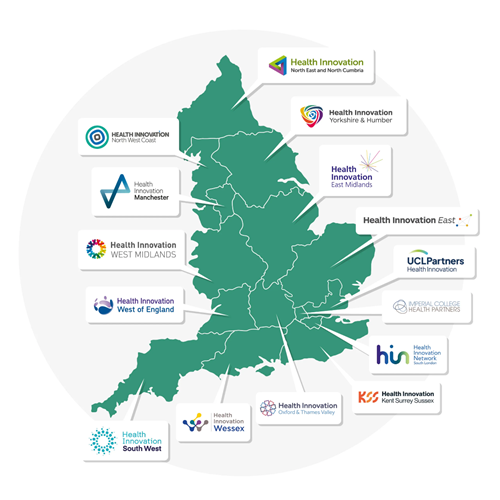
For innovators, Health Innovation Networks can provide valuable expertise, connections, and guidance throughout the innovation journey, from early-stage development through to implementation and scale-up.
Health Innovation Networks play an important role in helping healthcare innovations move from promising ideas to real-world impact. They provide support throughout the innovation journey by helping innovators understand NHS priorities, engage key stakeholders, generate evidence, navigate implementation challenges, and identify opportunities for adoption and scale-up.