
The SBRI Healthcare NHS Cancer Programme Innovation Open Call 4 is live!
The launch of the SBRI Healthcare NHS Cancer Programme Innovation Open Call 4 presents a major opportunity for innovators looking to demonstrate the value of proven technologies and accelerate adoption across the NHS. For organisations considering an application, one requirement stands out from the start. Proposals must include an independent evaluation partner.
At Unity Insights, we know what that means in practice.
We have supported evaluations across all three previous NHS Cancer Programme Innovation Open Calls, acting as the independent evaluation partner on four funded projects. Beyond cancer, we have delivered a total of 15 SBRI Healthcare-funded evaluations across a range of innovation programmes.
That experience gives us a practical understanding of what successful applications need, how evaluations should be designed from the outset, and what evidence commissioners ultimately require to support adoption and spread.
Understanding the SBRI Healthcare NHS Cancer Programme Innovation Open Call 4
The SBRI Healthcare NHS Cancer Programme Innovation Open Call 4 is looking for mature innovations that can help tackle two key challenges:

Improving productivity by managing demand or increasing capacity across cancer pathways

Driving earlier detection and diagnosis of cancer through screening, case-finding, prompt presentation, or diagnostic innovation
Applicants to the Real World Implementation and Evaluation Fund are required to work with an independent evaluation organisation to ensure the evidence generated is robust, objective, and credible.
This is not simply a tick-box exercise.
A well-designed evaluation can strengthen an application, reduce delivery risks, and ensure projects generate evidence that support future commissioning decisions. SBRI Healthcare states that lead applicants cannot evaluate their own projects internally and should subcontract this work to an external organisation.
Why involve an evaluation partner early?
The strongest projects build evaluation into the programme from day one, and this is especially true within the SBRI Healthcare cancer calls.
Bringing an evaluation partner on board early does not just improve delivery, it can strengthen the open call application itself. It shows assessors that a credible collaboration is already in place and that there is a clear plan for generating the evidence needed to support future adoption.
Too often, evaluation is considered after implementation plans have already been developed. By that point, opportunities to collect meaningful baseline data, establish governance arrangements, define measurable outcomes, and shape a robust evaluation approach may already have been missed.
Early involvement allows an evaluation partner to help applicants develop an evaluation plan that is both ambitious and practical. It gives confidence that the proposed approach is realistic, proportionate, and achievable within the project timeframe.
It also creates the opportunity to think carefully about health economics from the outset. Economic evidence is often one of the most influential factors in commissioning decisions, yet it can be difficult, or sometimes impossible, to generate retrospectively if the right data has not been collected. Early planning helps ensure the evaluation design captures the information needed for robust cost-effectiveness and budget impact analyses, identifies appropriate comparators, and establishes the baseline measures required to demonstrate value convincingly.
Working together from the outset means applicants can:

Develop a credible evaluation strategy that strengthens the bidding application and aligns with commissioning priorities.

Put the right foundations in place, including information governance, baseline data collection, and practical approaches to data collection across NHS sites.

Design a proportionate mixed-methods evaluation using the quantitative and qualitative approaches required to answer the most important questions.

Build robust health economic analyses into the project from the beginning, ensuring the right methodological choices are made (for example, cost-effectiveness
analysis or budget impact modelling), and the data needed to drive the models can be captured.

Anticipate implementation challenges and generate the evidence required to support future spread, adoption, and commissioning decisions.
At Unity Insights, we regularly support organisations during the application stage by helping to shape evaluation plans, refine methods, and scope what good evidence generation will look like. We see this as an investment in building strong partnerships and setting projects up for success, so we do not charge for this pre-award support.
What Unity Insights brings
Our approach combines methodological rigour with a clear understanding of how NHS decision-making works in the real world.
The SBRI Healthcare NHS Cancer Programme Innovation Open Call 4 is a fantastic opportunity to generate evidence and accelerate adoption, and a robust and comprehensive mixed-methods evaluation is essential as part of a successful bidding application. We often include some or all of the below in bids we are collaborating on:
🧭 Evaluation design and planning
- Theory of change and logic model development aligned to NHS adoption and real-world pathways
- Stakeholder engagement workshops with clinicians, commissioners, and delivery partners
- Evaluation framework design that links outcomes, data sources, and decision points clearly
- Full evaluation protocol development, aligned with SBRI Healthcare expectations and reporting requirements
- Mixed-methods evaluation design built for real-world implementation settings

🔐 Information governance and data readiness
- Early mapping of data requirements aligned with NHS systems and reporting needs
- Information governance support, including data protection impact assessment (DPIA) development and data sharing agreements (DSA) where required
- Practical design of data collection processes that work across real NHS sites
- Coordination across multiple sites and organisations, including governance alignment
- Embedding baseline data collection before implementation begins

📊 Quantitative and statistical evaluation
- Analysis of routine NHS and programme data
- Statistical analysis of outcomes, impact, and variation between sites or cohorts
- Before-and-after and quasi-experimental study designs where trials are not feasible
- Comparative analysis across groups, settings, or implementation approaches
- Clear translation of findings into outputs that support NHS decision-making

🗣️ Qualitative and implementation evaluation
- Interviews and surveys with patients, clinicians, and wider system stakeholders
- Real-world implementation and adoption studies focused on how interventions work in practice
- Thematic analysis to identify what helps or hinders delivery
- Insight into barriers, facilitators, and unintended effects
- Evidence that supports scale-up, spread, and adoption decisions

💷 Health economics and value evidence
- Cost-effectiveness analysis from an NHS commissioning perspective
- Budget impact modelling to support adoption and scale decisions
- Economic modelling based on real-world pathways and resource use
- Early planning to ensure the right data is captured for robust economic analysis
- Clear articulation of value for commissioners and ICS decision-makers

🌍 Equity, prevention, and sustainability
- Health inequalities analysis built into the core evaluation design
- Assessment of differential impacts across populations and care settings
- Environmental and sustainability assessment, where relevant to NHS net zero priorities

Turning evidence into adoption
Generating evidence is only part of the challenge.
Decision-makers need evidence that is credible, relevant, and useful.
Unity Insights was born within the Health Innovation Network and continues to work closely with Health Innovation Networks across England. We understand the realities of implementation, spread, and adoption within NHS systems, and the kinds of evidence commissioners need when considering future investment.
Our focus is practical and grounded in real-world delivery.
We help ensure evaluation findings answer the questions that NHS organisations are actually asking:
- Does this innovation improve outcomes?
- Does it improve productivity?
- Does it represent value for money?
- Does it reduce or widen health inequalities?
- Is it feasible to implement at scale?
- Should it become business as usual?
Case studies
Unity Insights have been involved as an independent evaluator in all three of the SBRI Healthcare cancer calls to date, with four projects in total. Examples of our previous work include:
Endoscope-i (Open Call 1)
CYTOPRIME2 (Open Call 2)
Quibim QP-Prostate (Open Call 3)
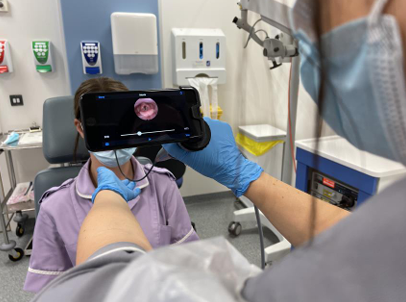


Unity Insights partnered with Endoscope-i to design an independent evaluation of a cloud-based platform enabling remote access to endoscopy data and facilitating a telescoping referral pathway for head and neck cancer.
Our work focused on defining a theory of change, establishing a robust logic model and evaluation framework, and identifying measurable outcomes aligned to NHS priorities. By structuring the evaluation early, we ensured the project could generate credible evidence around productivity gains, pathway efficiency, and clinical decision-making, positioning the innovation for adoption at scale across NHS services.
.
Unity Insights acted as the independent evaluation partner for the CYTOPRIME2 SBRI Healthcare project, evaluating the real-world implementation of a capsule sponge test to support earlier detection of oesophageal cancer. Using a mixed-methods approach, we assessed clinical outcomes, system impact, and economic value across multiple Cancer Alliances.
The evaluation demonstrated that the pathway could safely reduce demand on endoscopy services, with evidence of avoided procedures and strong patient and staff acceptability. Health economic and system dynamics modelling further indicated the potential for significant system-level savings if the pathway were scaled.
We are currently partnering with Quibim as the independent evaluation partner for Open Call 3, supporting the evaluation of their QP‑Prostate solution, an AI-driven imaging platform designed to enhance prostate cancer detection and risk stratification from MRI scans. By providing a segmentation of the prostate, it aims to improve diagnostic accuracy and fusion biopsy planning.
Our work to date has focused on establishing a robust evaluation framework aligned to SBRI Healthcare and NHS requirements, which has been critical in securing approval of the evaluation plan, ensuring that the programme is set up to generate credible, decision-grade evidence as implementation progresses through to 2027.
Preparing for the SBRI Healthcare NHS Cancer Programme Innovation Open Call 4
Competition guidance highlights the importance of establishing the right partnerships before submitting an application, including engagement with NHS organisations and independent evaluators. Applicants are encouraged to ensure the necessary expertise is in place early.
For organisations planning to submit a bidding application, now is the ideal time to start conversations about evaluation design, evidence requirements, and delivery planning.
Thinking about applying?
If you are considering an application to the NHS Cancer Programme Innovation Open Call 4 and would like to discuss your evaluation approach, we would be happy to share what we have learnt from supporting successful SBRI Healthcare projects.
📧 enquiries@unityinsights.co.uk
Independent evaluation should not be an afterthought. Done well, it becomes a strategic asset that strengthens applications, generates meaningful evidence, and helps accelerate the journey from innovation to routine NHS practice.
A briefing webinar was hosted as part of the SBRI Healthcare programme on Thursday 18th June, which covered the Open Call 4 requirements and what applicants need to consider when preparing bids. This webinar is a useful way to understand the scope of the programme and ensure your evaluation approach is aligned with what the funder is looking for.
Watch the SBRI Healthcare Open Call 4 Briefing Webinar on SBRI Healthcare’s YouTube channel